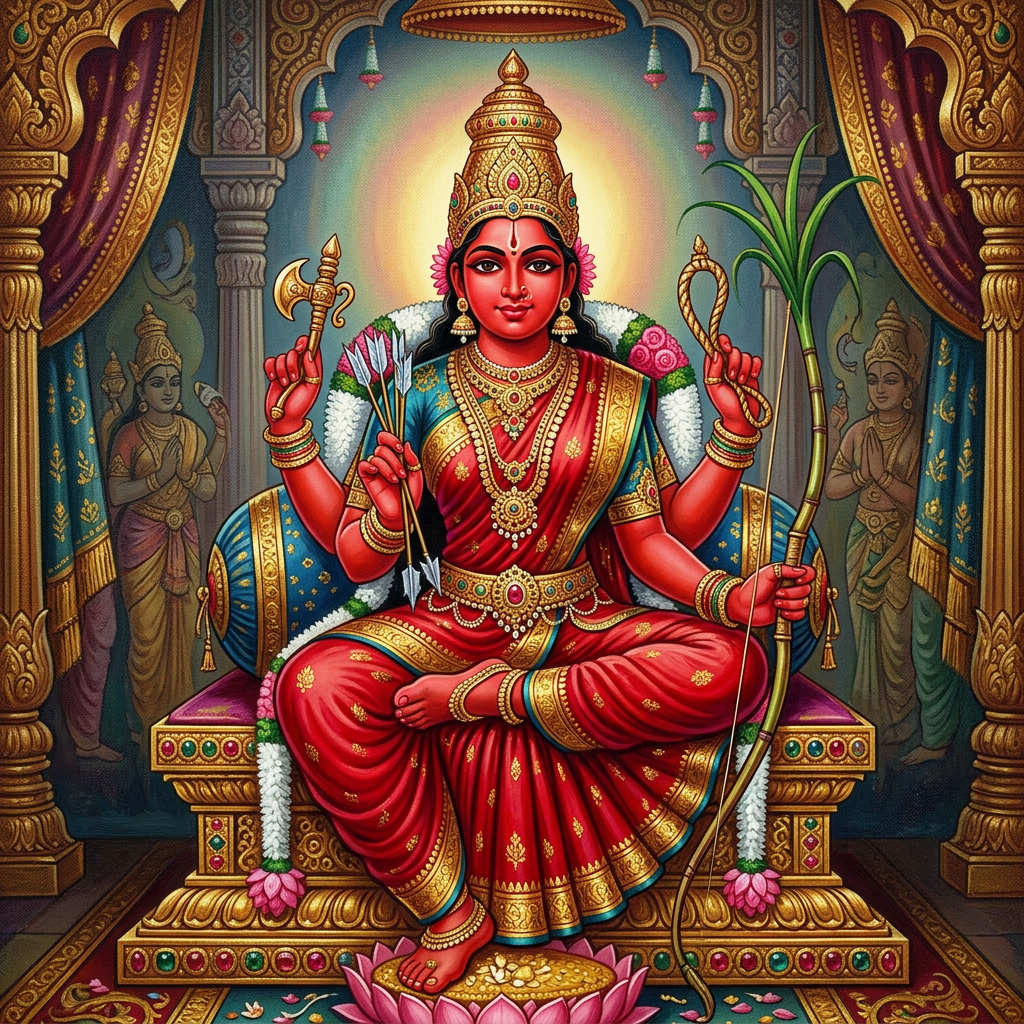
These are two names of the Divine Mother found in the Lalitā Sahasranāma. Antarmukha samārādhyā is the 870th name and means “She who is worshipped inwardly.” Bahirmukha sudurlabhā is the 871th name and means “She who is exceedingly difficult to attain for one whose awareness is turned outward.”
These two names can be puzzling when one first encounters them in the Lalitā Sahasranāma, because Bahirmukha sudurlabhā seems to sit in direct contradiction to the way worship of the Divine Mother is often understood.
The traditional forms of worship that many Hindu families are familiar with are outwardly expressed. We perform pūjā, offering flowers, light, incense, food, water, and other offerings to the chosen form of the Divine. We perform yajña, making offerings into sacred fire accompanied by mantras.
So when Bahirmukha sudurlabhā is encountered, a question naturally arises: Is this not the way to Devī? The Lalitā Sahasranāma itself seems to say that the Divine Mother is exceedingly difficult to attain when awareness remains turned outward.
Yet the starting point is often outward. From the moment a person is born, they are taught, directly and indirectly, to look outside themselves for happiness. They learn to seek what they believe will complete them in people, possessions, experiences, recognition, security, success, and countless other things. The objects may change, but the movement remains the same: happiness is believed to be somewhere outside.
Eventually, when the search turns toward the Divine, that same movement can continue. The Divine is sought in the image, the temple, the pilgrimage, or the external ritual. There is nothing inherently wrong with this. These can be beautiful and powerful forms of devotion. But if the search remains entirely outward, it may not provide the lasting contentment that initially led us to search for the Divine in the first place.
At this point, the Lalitā Sahasranāma comes to the our aid and reveals another dimension of worship. She is Antarmukha samārādhyā. She is worshipped inwardly.
But what does it mean to worship Her inwardly?
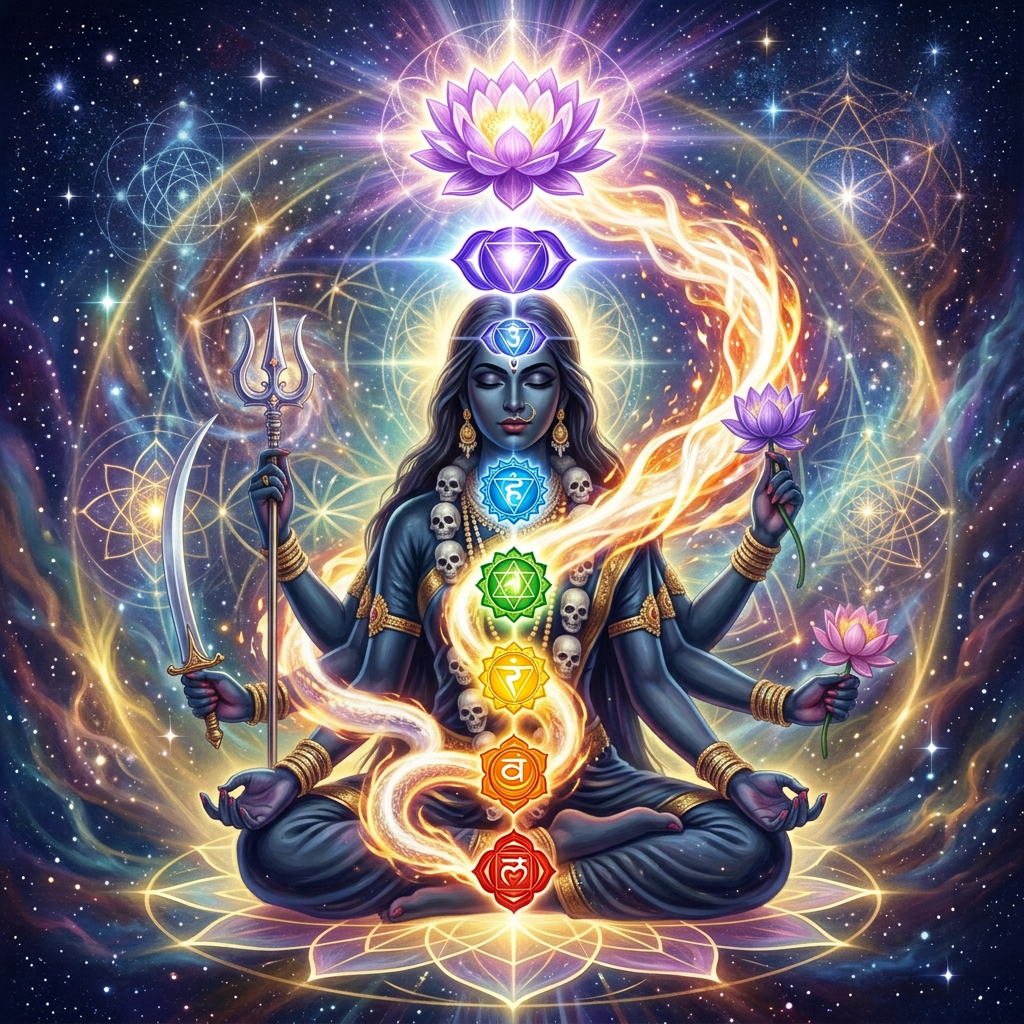
One way of understanding this comes through Samayācāra Tantra, a branch of the Tantric tradition in which worship unfolds internally within the sādhaka. The body and heart themselves become a living shrine for the Divine Mother. Rather than directing worship only toward something outside oneself, the sādhaka discovers the Mother within their own being.
The Lalitā Sahasranāma itself points toward this connection. The 98th name is Samayācāra tatparā, meaning “She who is deeply devoted to Samayācāra.” The Divine Mother is therefore not only described as one who is worshipped inwardly; She is also described as deeply connected with a path in which worship is performed within.
One example of such inner worship is Kuṇḍalinī sādhana, which involves turning attention toward the Śakti within the sādhaka rather than seeking the Divine only outside.
This does not mean that outward forms of worship need to be abandoned. Rather, the two movements can begin to meet. The image before which we sit can be held in the same loving presence that we begin to recognize within as the presence of the Mother.
Perhaps this is what makes Antarmukha samārādhyā and Bahirmukha sudurlabhā so powerful when placed together. She reveals that the outward form of worship is only the beginning. At some point, the direction of the search must change. And the movement inward allows the sādhaka to recognize the Mother who was present all along.
References
Chinnaiyan, K. (2019). Glorious alchemy: Living the Lalitā Sahasranāma. New Sarum Press.
Tantra Sadhana App. (2026, June 22). Samayachar Tantra: A beginner’s inner path to the Mother. Tantra Sadhana App article

Leave a Reply